

Product ref.
LBX-375
FlexxRay CW & Modulated Lasers
Experience precision and power with Oxxius FlexxRay lasers, engineered for stability, efficiency and superior beam quality.
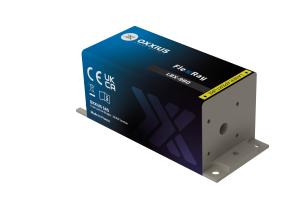

Engineered for Precision. Trusted in the Field.
At Oxxius, we build lasers that push the limits of optical performance with ultra-narrow linewidth and exceptional stability. FlexxRay series is a line of compact laser sources that deliver powerful, continuous-wave output in a TEM00 beam ; ready for seamless integration from UV to NIR.
Refine your search
Wavelength
Power
Product ref.
Wavelength
Power range
Spectral linewidth
Optical noise
Product ref.
LBX-395
Product ref.
LBX-405
Product ref.
LBX-415
Product ref.
LBX-445
Product ref.
LBX-450
Product ref.
LBX-458
Product ref.
LBX-473
Product ref.
LBX-488
Product ref.
LBX-505
Product ref.
LBX-515
Product ref.
LBX-522
Product ref.
LCX-532L (fixed power)
Product ref.
LCX-532L (adjustable power)
Product ref.
LCX-553L (fixed power)
Product ref.
LCX-553L (adjustable power)
Product ref.
LCX-561L-PPF (fixed power)
Product ref.
LCX-561L-PPA (adjustable power)
Product ref.
LPX-607L
Product ref.
LBX-633
Product ref.
LBX-638
Product ref.
LPX-640L
Product ref.
LBX-642
Product ref.
LBX-660
Product ref.
LBX-690
Product ref.
LBX-730
Product ref.
LBX-785
Product ref.
LBX-808
Product ref.
LBX-830
Product ref.
LBX-915
Product ref.
LBX-980
Product ref.
LBX-1064
Reference
Wavelength
Linewidth
Power range
Power stability
—
—
—
Optical noise
Beam diameter
—
—
—
Polarization
—
—
—
Extinction Ratio
—
—
—
Product ref.
Wavelength range
Power range
Product ref.
MixxWave with CW and modulated lasers
Need help?
Frequently Asked Questions
01 - Do I need an optical isolator?
An optical isolator prevents back-reflections from destabilising the laser cavity. For NIR free-space configurations, an isolator is systematically recommended. FC/APC fiber connectors provide inherent back-reflection suppression and may be sufficient for visible/fiber-coupled setups.
02 - Do I need fiber coupling, and which fiber type?
- SM (single-mode): diffraction-limited beam quality — for confocal and precision setups.
- PM (polarisation-maintaining): preserves polarisation state — for polarisation-sensitive experiments.
- MM (multi-mode): higher power delivery with relaxed spatial requirements.
Fiber length and connector type (FC/APC, FC/PC, SMA…) must be confirmed to match your instrument.
Note: If you are not experienced with SM/PM fiber injection, the Exoskeleton option provides a pre-aligned, mechanically stable assembly.
03 - Do I need modulation and which mode is right for me?
- MPA (Modulated Power Adjustment): analogue power control. Best for variable illumination without high-speed switching.
- AOM (Acousto-Optic Modulator): high-frequency switching up to 20 MHz. Required for FRAP, photoactivation, time-gated detection, spinning-disk confocal.
For DPSS models (532, 553, 561 nm), modulation requires the L1C or L1C+ driver combined with MPA or AOM — the DPSS gain medium cannot be directly modulated at high speed.
04 - Is a heatsink required?
For FlexxRay lasers above 300 mW, an external heatsink is required to ensure stable operation and long-term reliability. For OEM integrations, thermal interface design must be addressed in the early mechanical design phase.
05 - PP (lab) or OEM version?
- PP (laboratory): plug-and-play unit with standard connectors, ready for immediate use in a research environment.
- OEM: compact form factor for system integrators. Requires the integrator to manage power supply, thermal management and control interfaces.
Note: For OEM configurations, output power stability must be addressed early — thermal design and mounting conditions directly affect long-term performance.
06 - What beam quality can I expect?
FlexxRay delivers a TEM00 Gaussian beam — the tightest focus, highest brightness, best fiber coupling efficiency. Optical noise is as low as ≤0.2 % rms (10 Hz–20 MHz), ideal for quantitative fluorescence and spectroscopy.
07 - What is the difference between a diode laser and a DPSS laser?
Oxxius uses two complementary technologies in FlexxRay. Understanding the difference is key to choosing the right model:
| Laser diode (LBX) | DPSS (LCX / LPX) | |
| Principle | Direct semiconductor emission | Diode-pumped solid-state crystal, frequency-converted |
| Wavelengths | Broad UV-NIR (375–1064 nm) | Specific visible lines: 532, 553, 561, 607 nm |
| Linewidth | ≤1.5–2 nm (multimode) | ≤0.1–0.5 nm — much narrower |
| Modulation | Direct current — fast and simple | Requires L1C/L1C+ driver + MPA or AOM |
| Warm-up | Short | Longer — crystal requires thermal stabilisation |
| Best for | Fluorescence microscopy, flow cytometry, OEM, NIR | Raman, applications requiring 532/561 nm with tight linewidth |
Note: If your application requires 532, 553, or 561 nm (or demands sub-nm spectral purity) you need a DPSS model. For all other wavelengths and fast modulation requirements, a diode laser is the more efficient choice.
08 - Which wavelength and power level should I choose?
FlexxRay covers 375–1064 nm with over 30 wavelengths, from 40 mW to 1000 mW. Key pointers:
- Fluorescence microscopy: standard lines are 405, 445, 488, 515, 532, 561, 638 nm.
- Raman spectroscopy: 532 nm (DPSS) or 785 nm are the most common choices.
- NIR applications: 785–1064 nm options available.
Our team can help select the optimal wavelength based on your dyes, samples or instrument requirements.