
Product ref.
LPX-473S
Single Frequency Lasers
Unlock unmatched performance with Oxxius single frequency lasers, built for ultimate precision and stability.
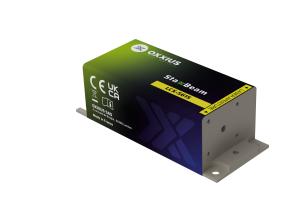

Precision you can measure. Stable power. Stable wavelength.
Whatever your experimental setup, you can rely on StaxxBeam lasers to deliver unmatched precision, spectral purity and long-term reliability.
Refine your search
Wavelength
Power
Product ref.
Wavelength
Power range
Spectral linewidth
Optical noise
Product ref.
LCX-532S (fixed power)
Product ref.
L1C-532S (adjustable power)
Product ref.
LCX-553S (fixed power)
Product ref.
L1C-553S (adjustable power)
Product ref.
LCX-561S (fixed power)
Product ref.
L1C-561S (adjustable power)
Product ref.
LBX-633S
Product ref.
LSX-785S (fixed power)
Product ref.
LBX-785S (adjustable power)
Product ref.
LBX-830S
Product ref.
LBX-830S pigtailed
Product ref.
LCX-1064S (fixed power)
Product ref.
L1C-1064S (adjustable power)
Reference
Wavelength
Linewidth
Power range
Power stability
—
—
—
Optical noise
Beam diameter
—
—
—
Polarization
—
—
—
Extinction Ratio
—
—
—
Product ref.
Wavelength range
Power range
Product ref.
MixxWave with Single Frequency lasers
Need help?
Frequently Asked Questions
01 - Do I need modulation and how is it implemented on DPSS models?
DPSS models cannot be directly modulated at high speed. Available options:
- MPA: analogue intensity control — for slow ramping or manual adjustment.
- AOM: high-frequency switching for FRAP, triggered acquisition, time-resolved experiments.
Both options require the L1C or L1C+ driver. Confirm switching speed before ordering.
02 - Fixed power or adjustable power?
- Fixed-power (LCX/LSX models): best noise performance ≤0.2% rms. Recommended when stability is the top priority.
- Adjustable-power (L1C models): variable output for experimental flexibility, at ≤0.5% rms noise.
Available in laboratory (PPA) and OEM versions. OEM format is for integrators embedding the laser into a custom instrument.
Note: For OEM configurations, long-term power stability must be validated early — especially in variable ambient temperature environments.
03 - Is a heatsink required?
For models above 300 mW, an external heatsink is required. DPSS sources are especially sensitive to temperature variations that affect wavelength stability and output power. For OEM integrations, this must be planned at the mechanical design stage.
04 - PP (lab) or OEM version?
- PP (laboratory): plug-and-play unit with standard connectors, ready for immediate use in a research environment.
- OEM: compact form factor for system integrators. Requires the integrator to manage power supply, thermal management and control interfaces.
Note: For OEM configurations, output power stability must be addressed early — thermal design and mounting conditions directly affect long-term performance.
05 - What does ‘single frequency’ mean, and is it necessary?
A single-frequency laser emits at one precisely defined optical frequency with a linewidth below 1 MHz — translating into an extremely long coherence length (hundreds of metres). This is essential for Raman spectroscopy, Brillouin scattering, interferometry, holography, and dynamic light scattering. For standard fluorescence microscopy, FlexxRay diode lasers are generally sufficient.
06 - What fiber coupling options are available?
Available in free-space or fiber-coupled output. For fiber, confirm: SM / PM / MM type, fiber length, and connector type (FC/APC, FC/PC, SMA…). A pigtailed version is available for the 830 nm model.
Note: For NIR free-space configurations, an optical isolator is systematically recommended to prevent back-reflections from destabilising the single-frequency output. The Exoskeleton option is strongly recommended for users not experienced with SM/PM fiber injection.
07 - What is the difference between a diode laser and a DPSS laser in the StaxxBeam range?
StaxxBeam brings together both technologies in a single-frequency context:
| Laser diode (LBX / LSX) | DPSS (LCX / LPX) | |
| Principle | Stabilised semiconductor, single-mode | Diode-pumped crystal, frequency-converted |
| Wavelengths in StaxxBeam | 473, 633, 785, 830 nm | 532, 553, 561, 1064 nm |
| Linewidth | ≤100 MHz — narrow but broader | <1 MHz — extremely narrow, long coherence |
| Modulation | Direct current modulation possible | Requires MPA or AOM |
| Warm-up | Short | Longer thermal stabilisation required |
| Best for | 785 nm Raman, DLS, NIR interferometry | Visible Raman (532, 561 nm), Brillouin, holography |
Note: For visible single-frequency applications (532–561 nm) with highest spectral purity — Brillouin spectroscopy, coherence-sensitive interferometry — DPSS is the right technology. For NIR (785, 830 nm) with simpler modulation needs, diode-based models offer more straightforward integration.
08 - Which wavelength and power level do I need?
- 532 nm or 561 nm: Raman, DLS, or fluorescence with green-excited dyes.
- 785 nm: gold standard for biological Raman — minimises tissue autofluorescence.
- 1064 nm: deep NIR for IR Raman or interferometric setups.
Power range: 40–800 mW depending on model. Our team can help calculate the required output based on your system’s optical losses.