

Product ref.
LDI-4
Laser Diode Illuminators (LDI)
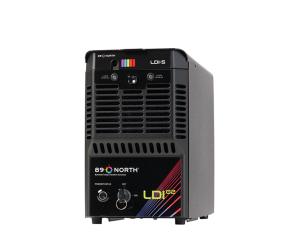
The MixxWave LDI (405 to 730 nm) is a high-power laser diode illuminator offering up to 1000 mW. It combines multimode lasers into one multimode fiber output.

More Power. More stability. More precision.
We offer two generations of high-performance laser diode illuminators to meet every research need. Our original LDI platform delivers proven, reliable multiline illumination: a trusted choice for a wide range of applications including spinning disk confocal microscopy, structured illumination microscopy, FRAP, photoactivation / photoconversion, and PALM/STORM. For researchers demanding even greater performance, our next-generation LDI-G2 Series builds on that solid foundation with breakthrough improvements in control, stability and power delivery, bringing a new level of intensity, consistency and precision to the most demanding live-cell and fluorescence imaging workflows.
Product ref.
Wavelength (nm)
Power range
Product ref.
LDI-G2-4
Product ref.
LDI-5
Product ref.
LDI-G2-5
Product ref.
LDI-7
Product ref.
LDI-G2-7
Product ref.
LDI-NIR
Product ref.
LDI-G2-NIR
Need help?
Frequently Asked Questions
Laser diode illuminators for spinning disk confocal, TIRF, STORM, PALM, or optogenetics require stable, linear, high-power multiline illumination delivered through a single fiber output. The following FAQ covers the key questions when evaluating the MixxWave LDI range (405 to 730 nm, up to 1000 mW) — from the differences between Gen 1 and Gen 2 to quantitative performance, maintenance, and laser safety. Our team is available to help identify the right configuration for your microscopy setup.
01 - What are the key things to consider before buying a light source for a fluorescence microscope?
The 5 key factors to evaluate are: wavelength, power, delivery, repeatability and cost. The LDI product line can deliver on all of these criteria, regardless of which generation you choose.
02 - What is the difference between LDI Gen1 and Gen2 ?
The LDI Gen1 is a multiline, solid-state laser illuminator offering up to 1000mW of output power via a multimode fiber at the price of a low power LED light engine.
The Gen2 line builds off the strengths of the earlier version, while adding :
- Increased power density: with a smaller core diameter and single fiber output, the same optical power is concentrated into a smaller area, which increases the intensity at the fiber output.
- Improved beam quality / coupling efficiency: a smaller fiber often helps produce a cleaner, more stable output profile, depending on how the mode is managed.
- Enhanced stability: the new configuration reduces fluctuation.
03 - Is the LDI a quantitative light source ? Can I rely on it for precision imaging ?
Absolutely. Linearity is a core characteristic of the 89 North range: all sources are stable and linear from 1% to 100% power. Gen 2 further strengthens this stability for protocols requiring consistent excitation over time: live-cell imaging, optogenetics, super-resolution, and beyond.
04 - Which researchers benefit most from these products ?
The LDI is particularly valuable for :
- Cell biologists studying dynamic or delicate processes where signal consistency is vital.
- Neuroscientists performing optogenetics or calcium imaging requiring precise, stable illumination.
- Microscopists applying super-resolution methods (STORM, PALM, SIM) that demand both high power density and stable performance.
- Core facilities supporting diverse imaging needs across multiple user groups.
Gen 1 is well suited for standard fluorescence applications; Gen 2 is recommended for the most demanding imaging workflows.
05 - What maintenance is required for the LDI ?
Virtually none. The LDI ships fully aligned and requires no regular alignment or cleaning. This is a significant advantage over conventional light sources, which typically demand periodic maintenance to maintain performance.
06 - What evidence supports the performance claims ?
Performance is backed by :
- Quantitative data: side-by-side output and stability measurements highlighting higher power density and improved consistency.
- Application-driven results: microscopy images demonstrating enhanced signal-to-noise ratio and resolution.
- External validation: early users and collaborators confirming reproducibility and system performance in real research workflows.
- Benchmarking vs. alternatives: higher efficiency and stability compared to standard fiber-coupled laser sources.
07 - What is the most important safety consideration when setting up a laser light source ?
Laser safety is the absolute top priority. Always read all documentation carefully before installation, and consult your institution’s laser safety officer with any questions. This applies to every product in the range.