
LDI-G2-5 Laser Diode Illuminator
LDI-G2-5
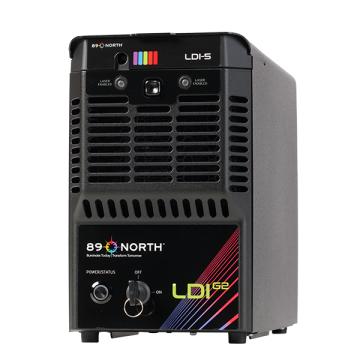
The LDI-G2-5 laser diode illuminator builds on the G2 platform with expanded power and spectral reach. Alongside the core visible lines, it extends into the near-infrared with a 730 nm channel, ideal for deep-tissue imaging and multiplexing imaging techniques. Combining brighter illumination with enhanced stability, the LDI-G2-5 delivers confidence in results across both traditional and cutting-edge applications. As with the 4-line model, optional 488 nm and 577 nm lasers can be included for GFP and mCherry imaging. Note that we can also work with you to provide solutions for your unique needs.
Key features
- 5 laser lines from visible to near-infrared (up to 730 nm)
- Up to 1000 mW output power per line
- Feedback-controlled optical stability
- Optional 488 nm & 577 nm lasers
- No user alignment required
- TTL & Analog control
Compare with the LDI-5.

References and product variations
Part number
Combined wavelengths (nm)
Options
Ask for a quote
Part number LDI-G2-5
Part number LDI-G2-5-577
Part number LDI-G2-5-488
Part number LDI-G2-5-488-577
Performance by Wavelength
Wavelength
Optical Power Min (1)
CW Stability (typ.) (2)
Max Rise Time (typ.) (3)
Max On/Off Frequency (4)
405
Optical Power Min (1) 450 mW
CW Stability (typ.) (2) <0.2 %
Max Rise Time (typ.) (3) <5 µs
Max On/Off Frequency (4) >1000 Hz
470 or 488
Optical Power Min (1) 1000 mW (5)
CW Stability (typ.) (2) <0.2 %
Max Rise Time (typ.) (3) <5 µs
Max On/Off Frequency (4) >1000 Hz
555 or 577
Optical Power Min (1) 700 or 500 mW (6)
CW Stability (typ.) (2) <0.2 %
Max Rise Time (typ.) (3) <2 ms
Max On/Off Frequency (4) 100 Hz
640
Optical Power Min (1) 1000 mW
CW Stability (typ.) (2) <0.2 %
Max Rise Time (typ.) (3) <5 µs
Max On/Off Frequency (4) >1000 Hz
730
Optical Power Min (1) 750 mW
CW Stability (typ.) (2) <0.2 %
Max Rise Time (typ.) (3) <5 µs
Max On/Off Frequency (4) >1000 Hz
(1) Defined in accordance with the QUAREP-LiMi WG 1 standard, “Illumination Power, Stability, and Linearity Measurements for Confocal and Widefield Microscopes V.2”, Section 8, with power output measured at the fiber output.
(2) Measured at 100% intensity, 23 °C ±2 °C.
(3) Defined in accordance with the QUAREP-LiMi WG 1 standard, “Illumination Power, Stability, and Linearity Measurements for Confocal and Widefield Microscopes V.2”, Section 8, with power output measured at the fiber output.
(4) Measured at 100 % intensity, 50 % duty cycle
(5) 470 or 488 - Optical Power Min: 488 nm optical power min preliminary estimate. Actual output power pending product release.
(6) 555 or 577 - Optical Power Min: 577 nm optical power min preliminary estimate. Actual output power pending product release.
Optical characteristics
Output Power
Up to 1000 mW per line
+ higher power density via 400 µm single
fiber
Optical Stability
Active feedback control
<0.2 % CW stability (10× improvement)
Laser Lines
5 lines: DAPI | FITC/GFP |
TRITC/mCherry | Cy5 | 730 nm NIR
+ optional 488 nm & 577 nm
NIR Channel (730 nm)
✔ Deep-tissue imaging
Multiplexing applications
Beam Quality
Improved beam quality
Cleaner, more stable output profile
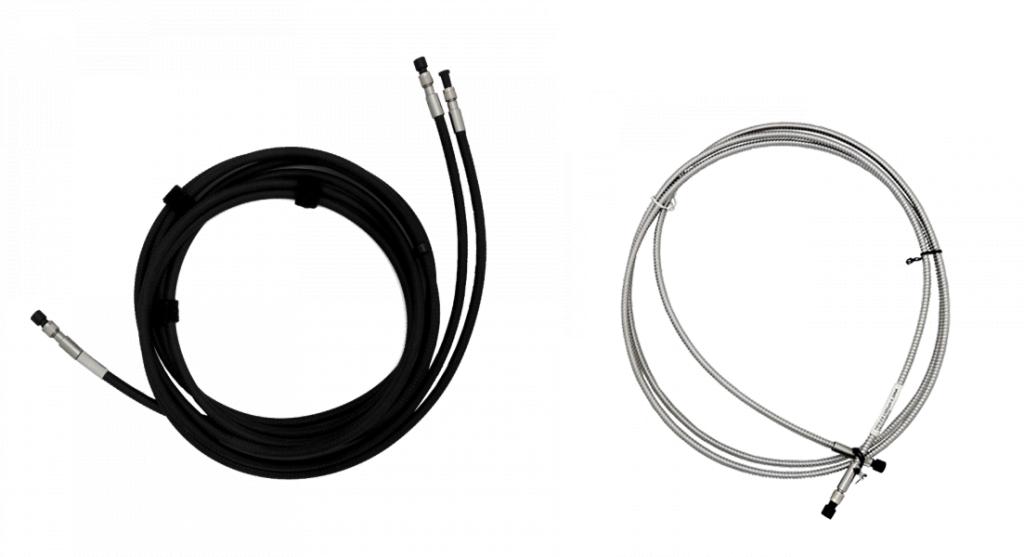
Fiber Output
400 µm single → higher power density
User Alignment
Not required
LDI-G2-5 Laser Diode Illuminator General specifications
Output Options
Optical fiber
(400 µm single, 0.39 NA)
Control Options
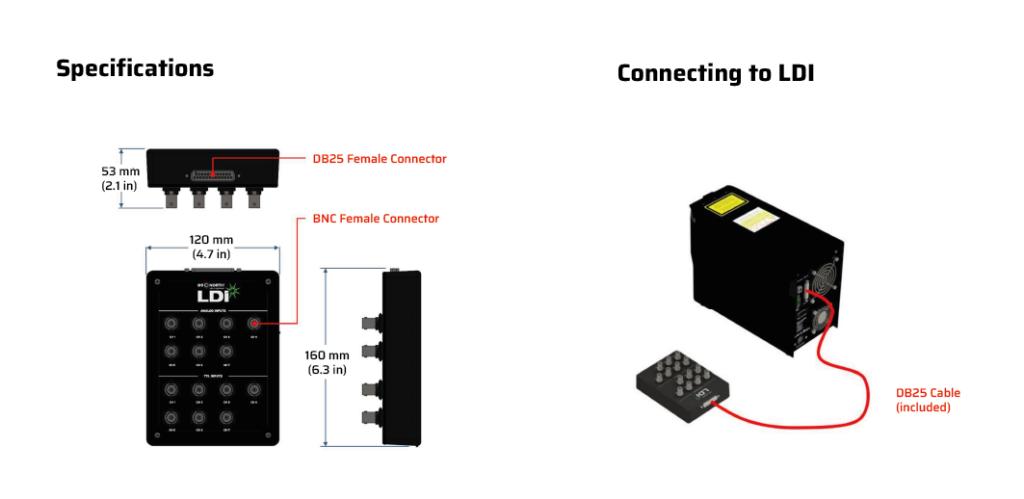
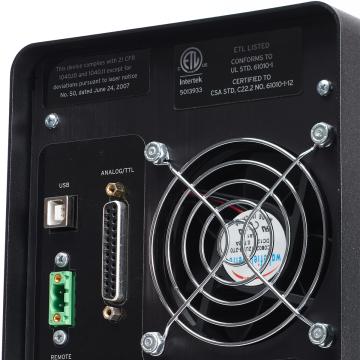
TTL (> 2.3 V) | Analog (0–5 V)
USB–DSP (virtual COM port)
Intensity Control
0.1% steps (10× finer)
Full linear range
Safety
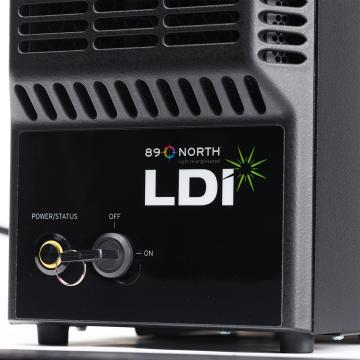
Interlocked housing | Key interlock
IEC 60825 compliant
QUAREP-LiMi WG1
✔ Compliant
Dimensions
318 × 234 × 146 mm
(12.5" × 9.2" × 5.75")
Weight
~4 kg (~9 lbs)
Operating Temp.
15 to 30 °C
Storage Temp.
-18 to 50 °C
Humidity
<80 % non-condensing
Voltage
90–220 V AC, 50–60 Hz
Warranty
2 years
Applications / Techniques
Spinning Disk Microscopy
Widefield Microscopy
Light Sheet Microscopy
Structured Illumination Microscopy (SIM)
Super Resolution Imaging
TIRF
PALM / STORM / DNA-PAINT
FRAP
Photoactivation / Photoconversion
Photoablation
Optogenetics
Near Infrared (NIR) Imaging — 730 nm
Neuroscience / Physiology
Cellular Biology
Single Molecule FISH (smFISH)
Spatial Transcriptomics / Proteomics
Digital Pathology
Need help?