

Raman Spectroscopy
Raman spectroscopy uses laser light to analyze molecular vibrations, Oxxius lasers ensure an accurate and consistent reading.
Raman scattering principles.
What is Raman spectroscopy?
Consider a piece of material illuminated by an intense light beam. The majority of the photons that interact with matter undergo elastic scattering; their energy remains unaltered. However, if the intensity is sufficiently high, then a small percentage of the photons undergo an inelastic process, known as Raman scattering after its discoverer. During this process, the photon exchanges some energy with the molecular bonds of the incident structure as it is being scattered away.
After collection, the resulting Raman light provides a spectrum that contains detailed information about the structure and chemistry bonds of the target matter.
Raman spectroscopy is thus a powerful and non-invasive technique used for chemical analysis. By illuminating a compound with a source of light, scientists can collect this “fingerprint” that allows for an unambiguous identification of compounds and materials. This technique is widely used in research, materials science, and life sciences to identify compounds and their proprieties.
Laser linewidth and stability
Why are lasers crucial for Raman spectroscopy?
The performance of Raman spectroscopy depends on how intense the excitation light is and on how densely concentrated its spectrum is around a single wavelength (as opposed to being spread over a large span). Lasers are light sources that exhibit both of those critical characteristics, which is why they are commonly employed in Raman spectroscopy.
The key requirements for such a laser are:
- A single-frequency operation, devoid of secondary peaks that could overlap with the Raman spectrum
- A narrow emission linewidth in order to resolve closely spaced Raman bands
- An excellent wavelength stability to ensure a good repeatability of the spectrum reading from one record to the next
- A high-power stability The Raman effect being non-linear, a small variation of the amount of the excitation power results in larger range of amplitude of the Raman signal.
Raman imaging (or mapping) is an important refinement of Raman spectroscopy consisting in recording multiple Raman spectra across a given sample, and thus create a map of the chemical compounds detected. For this specific application, it is important that the excitation laser exhibits a diffraction-limited beam in order to achieve the smallest possible imaging resolution.
The performance of a Raman spectroscopy is also contingent on the excitation wavelength. Shorter wavelengths (such as 532 nm) yield a more intense Raman signal. However, they also tend to induce a significant amount of fluorescence light which can potentially overshadow the weak Raman spectrum during the reading process. The user is guided in selecting the most appropriate laser source by several parameters, including the optical characteristics of the sample (e.g., the coefficient of absorption, the presence of fluorescence), the sensitivity of the spectrum detector, and the availability of an existing spectra database.

a 532 nm excitation laser
Oxxius DPSS single-frequency lasers
Why choose Oxxius lasers for Raman spectroscopy?
Oxxius has developed a unique monolithic cavity technology, protected by more than ten patents, that sets our DPSS lasers apart.
- A spectrum of high purity: the design of our resonator guaranties a spectrum free of detrimental side peaks, which therefore alleviate the need for an expansive cut-off filter on the collection arm.
- An ultra-stable single frequency: Our lasers maintain their wavelength stable within 1 pm (0.035cm-1 at 532nm), even after multiple restart sequences.
- Exceptional robustness: No moving parts, no adhesives — our monolithic resonators withstand thermal and mechanical variations.
- An ultra-narrow linewidth below 1 MHz: More than enough to resolve fine Raman features.
- A TEM00 beam quality to enable the smallest possible resolution in Raman imaging
- An optional side-mode suppression feature to enable the study of Raman spectra at low frequencies (100cm-1 or lower).
This combination ensures that Oxxius lasers deliver the reliability, precision and reproducibility required by demanding Raman spectroscopy applications.
532 nm narrow-linewidth DPSS laser
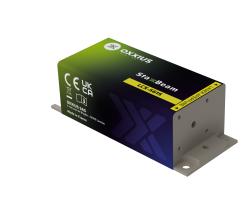
Featured product for Raman Spectroscopy: LCX-532S

- Wavelength : 532.3 nm
- Output power up to 800 mW
- Spectral linewidth < 1 MHz
- Wavelength stability < 1 pm (0.035cm-1)
- Power stability < ± 0.5%
- Power adjustment: an optional feature to tune the optical power without altering its spectral proprieties
The LCX-532S is ideally suited for high-resolution Raman spectroscopy of inorganic samples, providing unmatched accuracy and long-term stability.
Raman wavelengths portfolio
Related products
- LCX-561S – Narrow linewidth laser at 561nm for Raman spectroscopy and/or fluorescence imaging
- LBX-785S-ISO – Isolated, narrow linewidth laser at 785nm for Raman spectroscopy with a reduced amount of fluorescence
- LBX-633S – Narrow linewidth laser at 633nm for Raman spectroscopy


With Oxxius DPSS and diode lasers, you can rely on unmatched wavelength stability, spectral purity and robustness: the foundation of precision Raman Spectroscopy.